

External penetration testing services
An external penetration test evaluates your Internet-facing systems for security vulnerabilities. By simulating real-world attacks from outside your perimeter, your organization gains valuable insight into potential external cyber threats most likely to breach your network infrastructure and the required corrective measures to prevent it.
What you'll get after conducting an external pentest:
- High-level & risk management implications for non-technical stakeholders
- Technical report with prioritized vulnerabilities & recommended fixes
- Expert guidance on external network security posture improvement strategies
- Attestation to meet compliance requirements (SOC 2, ISO 27001, PCI-DSS, etc.)
What is an external penetration test?
At Vumetric, we offer External Penetration Testing services designed to simulate real-world hacking scenarios. By simulating the hacking techniques and exploits used by skilled hackers, our external penetration test includes a comprehensive security assessment that goes beyond simple automated vulnerability scans. The goal is to gain access to target systems under controlled conditions to evaluate the effectiveness of existing external network’s security posture
Our qualified penetration tester evaluate your security using industry-leading standards. We give you practical advice on how to strengthen your security measures, along with a step-by-step plan to fix any vulnerabilities we find. We don’t just identify security holes; we help you solve them. Plus, our external penetration tests meet key industry standards like PCI-DSS, ISO 27001, and SOC2. This means you’ll have all the documentation you need to meet these important compliance requirements.
Need pricing for an upcoming external pentest project?
Download our external pentesting case study
See our external penetration testing services in action and discover how they can help secure your public-facing network perimeter from modern cyber threats and exploits.

Download our internal pentest case study
See our internal penetration testing services in action and discover how they can help secure your internal network infrastructure from modern cyber threats and unauthorized access.
Download the 2025 edition of our penetration testing buyer's guide
Learn everything you need to know about penetration testing to conduct successful pentesting projects and make informed decisions in your upcoming cybersecurity assessments.



Receive clear and actionable results
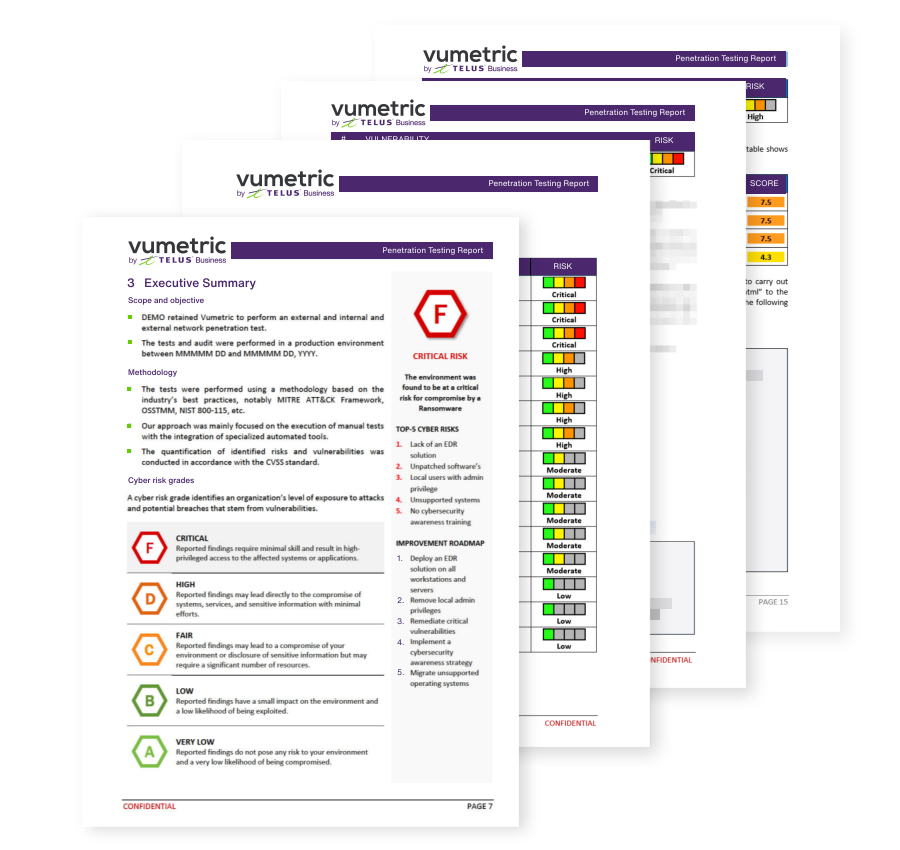
Our penetration reports deliver more than a simple export from a security tool. Each vulnerability is exploited, measured and documented by an experienced specialist to ensure you fully understand its business impact.
Each element of the report provides concise and relevant information that contributes significantly towards improving your security posture and meeting compliance requirements.
Executive summary
High level overview of your security posture, recommendations and risk management implications in a clear non-technical language.
Suited for non-technical stakeholders.
Vulnerabilities & recommendations
Vulnerabilities prioritized by risk level, including technical evidence (screenshots,
requests, etc.) and recommendations to fix each vulnerability.
Suited for your technical team.
Attestation
This document will allow you to meet compliance and regulatory reporting requirements efficiently and with minimal overhead.
Suited for third-parties (clients, auditors, etc).
Protecting against the latest cyber threats
Our experts hold the most recognized certifications to proactively protect our clients against modern attack techniques & exploits used to breach their cybersecurity.


Frequently asked questions
Didn’t find the answer to your questions?
How often should external pen test be performed?
According to industry best practices, external pen testing should be performed at least annually to keep pace with evolving cyber threats. In addition, external pentesting is especially critical in certain scenarios, such as Before launching new systems on the public Internet, after significant network changes, before compliance audits, after security incidents, and before major business events such as M&A transactions. This approach ensures that your organization is consistently fortified against the latest hacking techniques and vulnerabilities.
Will this test allow us to meet compliance requirements?
Every year, our external penetration testing helps a wide range of organizations meet their compliance requirements.
By identifying vulnerabilities that require attention and providing recommendations to address them, organizations can easily demonstrate their improved security posture to third-parties.
After corrective measures have been deployed, we go one step further by conducting remediation testing to validate the fixes. This allows us provide an official attestation that the identified vulnerabilities have been successfully remediated. This end-to-end service enables organizations to efficiently meet and maintain compliance standards such as SOC2, ISO27001, PCI-DSS, etc.
What is the cost of an external penetration test?
The cost of a penetration test can vary significantly depending on the scope of the assessment.For external penetration testing, one of the most significant factors in the price is the number of IP addresses that need to be evaluated.
Learn more about the main factors that determine the cost of a penetration test →
Quickly receive a free quote with no engagement using our streamlined quoting tool →
Which pentesting methodologies do you follow?
Our certified penetration testers use globally recognized frameworks, such as the MITRE ATT&CK and OSSTMM testing methodologies, to provide an accurate snapshot of your current external cybersecurity risks that could escalate into an incident.Using a blend of manual and automated techniques, we not only identify vulnerabilities, we contextualize them.This helps our clients effectively allocate their IT and network security resources to protect sensitive data.
What is the difference between external and internal testing?
Internal pentesting is conducted from within the organization’s network by a tester who has access to the internal network. External pentesting is conducted from outside the organization’s network and simulates an attack on public-facing systems. The primary difference is the point of origin of the test, with internal testing being more focused on internal network security measures while external testing focuses on identifying vulnerabilities in systems that are accessible from the internet.